PROLOGUE
In November 1949, family, friends and fellow congregants joined my dear parents,Harry and Millie Isaacson in celebrating the barmitzvah of me, their youngest child, Avraham Ben-Zion, in Johannesburg’s Berea synagogue. The Sidrah (Torah portion) of the week was Chayei Sarah, the section commencing with the death of the Biblical matriarch Sarah, and I, the young Baal Simcha,succeeded in chanting it in its entirety, an apparently all but unprecedented feat for a Jewish boy in South Africa at the time. I was blessed with a fine treble voice and musical gifts that would later see me become a composer of liturgical music in my own right and on that occasion, I also conducted the full Shabbat (Sabbath) services. I was told by several of the guests that I seemed to have a bright future ahead of me in the rabbinate, if I chose to go in that direction.
My father was unusual in that he had by then returned to the strict Orthodoxy of his forefathers, long before it became fashionable to do so. In hindsight, I realise that doggedly adhering to one’s convictions even if it meant swimming against the tide of public opinion was a trait he passed on to me. From early boyhood, I was a wilful, fiercely independent spirit who kicked against the status quo and preferred to live life on my own terms, rather than simply accepting what I was told to think and do. That trait was instrumental in forming my later uncompromising opposition to the racial oppression and injustice I saw around me in the land of my birth.
The word “struggle” has a special resonance in South Africa. For many years, it has been inextricably associated with the broader fight for justice and human rights that was waged in the country during the post-war decades. That fight, which culminated in the demise of white minority rule and transition to non-racial democracy in April 1994, came to be referred to simply as “The Struggle”. It was a struggle which become intertwined with my personal life’s journey. For that reason, I have chosen to call this autobiography Struggle Rabbi. It was a distinctly lonely journey, since at that time, I frequently found myself battling not only the apartheid authorities, but the entrenched attitudes of my own community.
Indeed, those are equally sound reasons, however, for including the word “Struggle” in my autobiography. It is something that goes beyond the relatively narrow field of politics to encapsulate my life and personality as a whole. Just as I excoriated the apartheid regime, I also found myself inveighing against the failings I saw within that community – even, indeed, within my own profession. Whether it was against intolerance and baseless hatred among my fellow Jews, apathy and lazy complacency among my congregants or the arrogance so often displayed by community leaders whose authority derived more from their wealth than their personal qualities, I chose never to kowtow and to be clear in stating my beliefs. At a time when the South African rabbinate in the main consisted of staid, scholarly and restrained clerics from abroad, primarily the UK, people did not quite know what to make of such plain-spoken directness. It aroused opposition, suspicion, calumny and bewilderment.
The numbers spoke for themselves. My outspokenness provoked both outrage and uneasiness within sectors of the community, but people – particularly the youth – were far more open, coming to hear me all the same. However, there was a steep price to be paid for this: all too often, my excessive stridence sabotaged my objectives when a more measured and diplomatic approach might have been more productive. As a result, my career – particularly in the early years – was marked by a series of false starts, of disappointing ends to promising beginnings. My natural recalcitrance and hot-headedness did not always serve me well.
It was not just my controversial politics – in which, as I have noted above, I seemed often to be alone in declaring openly – that contributed to the vicissitudes in my personal and professional life over the years. I recognise now that my own complex, in some ways profoundly conflicted personality also played a role. My “Struggle” has been inwardly as well as outwardly focused, since despite my intellectual and creative capacity, my energy and my ability to engage others through my oratory, I have had to deal throughout my life with mood swings and bouts of depression. It was only much later that this illness would be properly diagnosed and dealt with by the medical specialists involved.
I became barmitzvah – the traditional term for a Jewish boy’s religious coming of age – at a bleak time in South Africa’s history. The previous year, to the surprise of many and the consternation of most – bearing in mind that the majority of South Africans, falling as they did into the “non-white” racial category, were unable to vote – the hard-line, ultra-conservative National Party had come out on top in the general election. It had done so on an unambiguously white supremacist platform, based on a far-reaching political programme whose ultimate aim was to entrench the lion’s share of power and privilege in the hands of the country’s white minority and permanently exclude non-whites from an equitable share in the country’s resources. Racial discrimination had been very much part and parcel of the country’s socio-political and economic fabric prior to the 1948 election, but thereafter it was extended and systematised to an unprecedented extent by the new regime under the broad rubric of what was officially called “apartheid”, an Afrikaans word meaning “separateness”. Moves were swiftly underway to introduce far-reaching new legislation, or expand on laws already in force, that would strictly control and regulate practically all aspects of everyday life – whether concerning the workplace, public amenities, education, right to own land, place of residence, travel, politics, collective bargaining and even marital and sexual relationships. Regarding the last, 1949 had already seen the passage of the Prohibition of Mixed Marriages Act, which extended the existing ban on marriages between whites and blacks to unions between whites and people of mixed race.
At 13, I was still too young to know very much about any of this. My immediate focus was on exploring and deepening my own connection to my religious heritage, although my interests extended very much into the secular realm as well. During this period, I also acquired a lifelong love of classical music and, alongside my growing religiosity, developed a full-blooded devotion to the cause of Zionism. My main interest at the time centred on my membership of the young, but growing religious Zionist movement, Bnei Akiva. Along with some 10 others, I was part of a group of religious youngsters who came together to study Talmud under Rabbi Michel Kossowsky, of blessed memory. This pioneering class formed the kernel of what was to become Yeshiva College, South Africa’s first religious Jewish day school. This is not to say that during those formative years I was a lad of sober, scholarly piety; far from it. I was a high-spirited, fun-loving youth who loved provoking – and occasionally outraging – others with my sense of humour and a playfulness which has always been part of my personality.
In the early 1950s, I became one of the first boys in the Jewish community to leave my home and family to study in yeshivot overseas. It was on my return that I became truly aware of the extent of the injustices being perpetrated against fellow South Africans not fortunate enough to fall into the privileged “white” racial category. However, unlike the majority of the official Jewish leadership – both religious and secular – I was not prepared to remain silent. It flew in the face of everything I knew to be morally and Jewishly right. Inspired by the example of my great teacher and mentor, Chief Rabbi Louis Rabinowitz, I chose to denounce the evils of the apartheid system, both from the pulpit and in print. At a time when most of the community wanted nothing to do with Jewish leftists who confronted that system from outside the law, I considered it a moral obligation not only to support their efforts, but to befriend them, to the extent of taking in the children of activists Ben and Mary Turok after they had gone underground to evade arrest.
None of this came without a price. My activism cost me my first two pulpits, at a time when I already had a family to support. On one occasion, my home was raided and ransacked by the security police. The sermons I had preached from the pulpit had attracted a committed following wherever I went, particularly among the youth, but others felt uncomfortable, if not affronted altogether, by my outspokenness.
My life’s journey has included its fair share of false starts and wrong turnings. At one point, I exchanged the religious life for that of a secular Zionist living in Israel, and before my permanent return to strict Orthodoxy, I held a pulpit within the Reform movement for a number of years. What remained consistent, however, was my vocal rejection of apartheid, which continued despite the growing opposition of the more conservative members of my congregation, including several of its senior lay leaders, and it led to my being forced once again out of my position.
By then, I had in any case become disenchanted with Reform. By the end of the 1980s, I had fully returned to my traditional roots and been accepted back into the fold by my Orthodox colleagues. This spiritual journey back to Orthodoxy coincided with my most intense and sustained period of political activism yet. It was during these years, when the apartheid system was clearly on the way out, but the nature of the regime that would replace it was still uncertain, that I was privileged to campaign side by side with such legendary anti-apartheid activists as the Reverend Beyers Naudé, Helen Joseph and Archbishop Desmond Tutu. I was also involved in the establishment of Jews for Justice, an organisation providing a specifically Jewish forum through which to campaign for a democratic, non-racial solution to the country’s problems. Far more controversial were my statements in support of international sanctions against South Africa. This was something the great majority of the Jewish community, even those on the liberal side of the spectrum, roundly rejected. It resulted in my no longer being able to find employment in South Africa, and my moving to neighbouring Zimbabwe to take up a rabbinical position.
It is a sad irony that all this came about at a time when the struggle against apartheid was entering its final, triumphant phase. By the end of the 1980s, control of the ruling National Party was firmly in the hands of a new, reformist-minded administration that recognised the necessity of negotiating with the resistance movements, rather than trying to perpetually side-line and silence them. The following decade commenced with the unbanning of the African National Congress, among other hitherto proscribed organisations, and the release of political prisoners, most notably Nelson Mandela. Before long, political exiles were streaming back to South Africa, and negotiations towards a new political settlement were underway. In the early months of 1994, this culminated in the country’s dramatic transition from minority rule to multi-racial democracy. In all of this, still living in Zimbabwe, I was essentially a spectator. By the time I returned, apartheid had been thoroughly consigned to history and the new regime had been in power for a number of years.
With its many twists, turns, proclivities and complexities, it seems to me that my story defies categorisation. I was blessed with gifts that might have carried me far, had I chosen to devote them only to the status quo of the rabbinate at the time. But the complexities within my personalities meant that, even at a very young age, I never fitted into the common mould – and, indeed, I never attempted to do so. I have never been comfortable trying to adapt myself to my environment; my natural milieu has always been to make that environment conform to my vision of what is true and right. The compulsion to do so was what emboldened me to speak out against an evil system when most other rabbis chose to remain silent or, at best, limit their criticisms to private conversations.
I have come a long journey spiritually which has led me away from and, finally, back to my true Orthodox roots. The country and cause to which I committed so much of my passion have also undergone a sea change. But what has remained is my compulsion to speak out against injustice and champion what I know to be right. As a Jew, as a rabbi, as a South African, as a father and as a man answerable not only to G-d and his community, but also to his own conscience, I believe no less is expected of me.
Chapter 1
Beginnings
The year 1936 was an anxious time for the global community. Less than two decades before, the European continent had been embroiled in the worst period of blood-letting in its already violent history, referred to shortly thereafter as the Great War and today, in view of what transpired subsequently, as World War I. The devastation of that conflict had spread to many other parts of the world, including far-off Southern Africa. Now, despite earnest efforts by the victors of that struggle to maintain the peace, the shadow of approaching war was beginning to fall once more. In particular, the re-emergence of a strong, aggressively assertive Germany, now in the grip of the ultra-nationalist and radically racist ideology of National Socialism, pointed to a renewed period of hostilities, but there were many other threats to global stability. Everywhere one looked, totalitarianism appeared to be on the march, in comparison with which the Western democratic nations appeared to be divided, demoralised or simply disengaged from it all.
Notwithstanding all these fears and tensions, life carried on as usual. People went out to work, married and, in due course, brought children into the world. Towards the end of 1936, on November 8, a third child was born to Harry and Millie Isaacson in Johannesburg, South Africa. Named Avraham Ben-Zion, it was as “Ben” that I would generally be known.
Our family was descended from first-generation Lithuanian immigrants. In the half-century roughly spanning the years 1880-1930, the country had seen a sustained wave of Jewish immigration from Eastern Europe, resulting in the Jewish population increasing more than 20-fold, to number close to 100 000 souls by the mid-1930s. The majority were from Lithuania (or “Lita”, as its Jewish inhabitants called it), a term then referring not only to the area comprising the modern-day state of that name, but also to Latvia and parts of Eastern Poland and Belarus. My own forebears came from Lithuania proper, in the case of my paternal grandparents from the shtetl (village) of Ponevezh. My father, Azriel Hertz – Harry, as he would always be known – arrived in South Africa as an infant while my mother, Millie Rosenberg, was born after her parents’ arrival in the country.
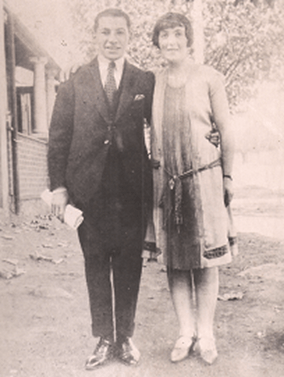
At the time of my birth, even though the instability rocking Europe was thousands of miles from my native Johannesburg, there was an understandable spill-over of apprehension in the South African Jewish community. Most still had relatives living back in “Der Heim” (“The Homeland”) and memories of how disastrously the previous conflict had impacted Lithuania’s small towns and villages were still fresh. Far more menacing was the sinister nature of the new regime in Germany. Throughout their long exile, Jews had become all too familiar with the realities of anti-Semitism, yet there was something especially new, and virulent, about the kind of anti-Jewish hatred being propagated by Hitler and his fanatical Nazi followers. For the first time in the long, painful exile, Jews were confronted by an enemy so thoroughly imbued with hatred for them as to regard all Jews everywhere, even those who had abandoned all vestiges of Jewish belief and practice, as being by their intrinsic nature fundamentally and irredeemably evil. Even so, few back then could have anticipated the frightful lengths to which the Nazi regime would go to deal with this supposed “cancer” in their midst.
Looking back, I think that the year 1936 should go down in history as the one in which the world gave a “kosher stamp” to the Nazi regime by having the Olympic Games in Berlin. The position of world Jewry was becoming clearer and clearer, but nobody wanted to take notice of it.
When I was born, Jewish immigration to South Africa had already been severely curtailed by the passage of the Quota Act of 1930, a measure primarily aimed at drastically reducing the number of any further Jewish immigrants arriving from Eastern Europe. The Aliens Act 1 of 1937 went a step further by cutting down on all Jewish immigration to South Africa, at a time when it was increasing because of the persecution of Jews in Nazi Germany. There was mounting political pressure throughout the 1930s to curtail the influx, in large part driven by economic jealousy and fears of competition from within the so-called “poor white” section of the population. It led the United Party government, headed by Prime Minister JBM Hertzog, to introduce a Bill to restrict and regulate immigration and exercise control over “resident aliens”. Curbing Jewish immigration in particular was not stated specifically in the Bill, but the debates in Parliament leading up to its adoption left no doubt that this was the intention.
The then National Party opposition, led by Dr DF Malan, tried to amend the Bill specifically to halt Jewish immigration and to end further naturalisation of Jewish permanent residents of South Africa. It also sought to bar Jews and “other non-assimilable races” from certain jobs, as Malan felt Jews were employed in the best positions and that “the Afrikaner is suffering in consequence”.
The Aliens Act became law in February 1937. It brought about a selection board to screen every potential immigrant from outside the British Empire or Ireland, and had the power to withhold a permit of entry to the country. As a result, Jewish immigration to South Africa from Germany dropped precipitously. Most of those allowed in after the passage of the Act were family of Jews already resident in the country. The policies adopted by South Africa were hardly unique. At this time of desperate need of German Jewry, one country after another cracked down on further Jewish immigration. Would they have acted differently had they known that outright extermination, as opposed to mere legal discrimination, awaited those still trapped in Europe once the war began? One would like to think so, but in view of the callous abandonment of European Jewry by the nations of the world – to the point where nothing was done by the allied governments, even when clear evidence of the death camps began emerging – it may be that even then, the doors would have remained closed.
We lived in a small house in the suburb of Brixton in Johannesburg. My dad had a small grocery shop called Popular Stores and we lived in a house at the back. Aside from ourselves and one other Jewish family, there was hardly any Jewish life in Brixton, so we had to go outside to find it. At a young age, my brother, Charles, of blessed memory, used to shlep me to shul on Shabbos – to Fordsburg and Mayfair, a substantial distance away.
(To avoid confusion, Shabbos is how Shabbat, ie the Sabbath, is commonly pronounced by Jews of East European origin. The expression will be used interchangeably throughout this book.)
Charles, my oldest sibling, was educated at Parktown Boys’ High because of the anti-Semitism at the local Brixton school. He went on to become professor and then professor emeritus of pathology at the University of the Witwatersrand (Wits). Pauline, the middle child, became a teacher. She eventually settled with her husband in Israel, passing away there shortly before the turn of the century at the relatively young age of 68.
Our family at that stage was not strictly shomrei Shabbat (observant of the laws pertaining to the Sabbath). Both Charles and I would thus hurry home from shul every Saturday to listen to the SABC’s symphony concert on the radio. It was the beginning of my lifelong passion for music. For the Yamim Tovim (festivals), my father would book the family into a boarding house in Doornfontein, the then heartland of Jewish Johannesburg. He, Charles and I would attend the Yom Tov services at the Beth Hamedrash Hagadol, then considered to be the most seriously Orthodox of Johannesburg’s mainstream Jewish congregations.
I was often rebellious and disobedient as a child. I was the enfant terrible – the naughty one. Charles and Pauline were models of good behaviour. My brother was an outstanding scholar; my sister was the blue-eyed baby at a teachers’ seminary. I was always seeking pleasures outside of the home and away from the family. I commenced my school career at a Brixton English-medium school, but wasn’t happy there. It was very anti-Semitic, as was the whole atmosphere in Brixton. My brother was beaten up at school, purely because of his Jewishness. Although it was called an English-medium school, the teachers spoke Afrikaans to each other most of the time. And they were distinctly pro-German. When the war ended, it was a great relief for my entire family.
The years in which my siblings and I grew up were, in retrospect, the heyday of anti-Semitism in South Africa. A number of far-right-wing Afrikaner nationalist groups were active throughout the country, combining enthusiastic support for Nazi Germany and the Nazi ideology with virulent propaganda diatribes against the Jewish community. Anti-Semitism, while less extreme and in-your-face, was prevalent among English-speaking South Africans as well. Unlike in modern, post-apartheid South Africa, there was back then no such thing as constitutionally prohibited hate speech based on race, religion, ethnicity or similar such grounds. Only with the revelation of the shocking events of the Holocaust, combined with a rise in Jewish status and self-assertiveness through the establishment of the State of Israel, did open displays of anti-Jewish bigotry become taboo, at least in polite society. It is relevant to note that the National Party, then still in opposition, espoused anti-Semitism as an official part of its programme, inter alia by barring Jews in the Transvaal from becoming members of the party. This in turn would contribute significantly to my visceral antipathy towards the Nationalist regime and my outspoken opposition to it, even though once coming into office, the party eschewed its former anti-Semitic policies.
In the mid-1940s, our family moved from Brixton to Berea to the home of my father’s late parents. It was a heavily Jewish area, which gave further impetus to my dad’s deepening religiosity. He now became fully shomer Shabbat, which – among other things – meant closing his store on Saturdays and not smoking for the entire duration of the Sabbath. Having accepted upon himself the laws of the holy day, he strictly adhered to them, and remained shomer Shabbat until his passing more than 30 years later, in 1976.
One thing that must be noted about my late father was his determination to give his children a Jewish education. That he was able to do so may not seem so remarkable in Johannesburg today, where close on 90 per cent of Jewish children receive their education in one or other of the many Jewish day schools that have been established in the city since 1948. Back then, however, it took considerable trouble and self-sacrifice on the part of parents and children alike. My father insisted on his children having private tuition and paid for a teacher to come from the centre of town by tram.
The first teacher was the Rev Moshe Katz, of the Wanderers View Braamfontein Hebrew Congregation. The next one was the Rev Israel Mitavsky, who came from the little dorp of Theunissen in the Free State. He moved to Johannesburg and attempted to eke out a living by giving private lessons. I think this was the first time I really showed my naughtiness. He used to teach us Jewish Bible stories and we used to laugh at his English, which was minimal, because he came from Eastern Europe originally.
We used to get the giggles at his Yiddish accent. He would prolong certain episodes in Jewish history, like the destruction of the Temple. It pained him as if it had happened the day before. It didn’t pain me that much – I was just waiting to see when the lesson would end!
The lessons started when we still lived in Brixton and continued when we moved to Berea. There, I switched schools to attend King Edward VII School (KES), where there was a substantial number of Jewish boys. Living in a heavily Jewish area, I became increasingly involved in communal and religious life. Although I had been to shul in Mayfair and Fordsburg, this was the first time I took it seriously. My father insisted that we go to the Berea Shul [at the time one of Johannesburg’s largest Jewish congregations]. He began to express his religiosity at a much higher level. Following his parents’ demise, he followed all the mourning laws to the letter for a whole year, going to shul every morning at 6.30. He was a different man in many ways, reborn in a sense. He stopped going to work on Shabbos, closing the grocery store on Saturdays. And, soon enough, he became a member of the Berea Shul committee. In those days if you went to synagogue regularly and long enough, this was automatic.
In Berea, I had a Hebrew teacher, Alexander Levin, of blessed memory, who made a great impression on me. Levin was better known in Cape Town, where his contribution to Hebrew education was immense. My next Hebrew teacher, Reuven Shalit, was an even more important influence on my development. His knowledge of Torah was extensive, as was his ability as an educator. He so impacted on me that, as a teenager, I had a number of religious experiences. Shalit had previously lived in Israel, where he had become an actor in the then newly-founded Habimah Theatre in Tel Aviv. The impressive theatre, now world-renowned, was founded originally in Moscow.
Among these experiences was singing in the choir of the Berea Synagogue. I was chosen as a soloist and joined in duets with the famous cantor Shlomo Mandel. At the same time, I found myself mixing with a more observant group of youngsters and in due course became a member of the youth movement Bnei Akiva, previously called HaShomer HaDati (The Religious Guardian).
It was a young movement, struggling to find its place in the Jewish community. It succeeded, however, in transmitting the tenets of Judaism and Torah – also religious Zionism – to many young people.
It was not my family’s custom to permit me to go out on a Friday night or to be away from home. But on Shabbos itself, after shul and singing in the choir during the services, I spent my time in the company of boys and girls from the movement.
Socialising between members of the opposite sex was not held to be a problem in Bnei Akiva. As long as certain basic levels of sexual modesty were adhered to, such intermingling – whether for ideological or purely pragmatic reasons can be debated – was considered to be quite acceptable, and even healthy. In charedi (Ultra-Orthodox) circles, the practice was to keep the sexes strictly apart, certainly after bar/batmitzvah age (13 for boys and 12 for girls, marking the passage from childhood to adulthood). In the South Africa of the late 1940s, however, it could not really be said that a truly charedi movement as yet existed. The community most closely orientated towards that approach was Adath Jeshurun, a congregation founded in neighbouring Yeoville the previous decade by German-Jewish immigrants dissatisfied with the standards of religious observance in the mainstream shuls at the time. However, even Adath Jeshurun back then was more flexible when it came to the separation of the sexes outside of the synagogue environment, allowing, for example, the staging of mixed-gender theatrical productions. I thus grew up thinking nothing of Orthodox boys and girls intermingling in a social context. It would only become a problem a few years later, when I was studying in more charedi yeshivot (academies of Torah study) in the United States,
Shortly before my barmitzvah, my family had the honour of hosting Rav Yosef Shlomo Kahaneman – the famed “Ponevezher Rav”, founder of the leading and prestigious Ponovez Yeshiva in Bnei Brak, Israel – during one of the fund-raising visits he periodically made to South Africa in the post-war years. Because he himself came from Ponevezh, my father was asked to assist with Rav Kahaneman’s transport arrangements, and was happy to oblige, personally driving the great Torah leader around the town and further afield. Sitting in the back, I would sometimes accompany them. At one Shabbos meal at our home, Rav Kahaneman took my hand and said to me: “Du verst sein a Ben Torah” (“You will be a Ben Torah”, that is, a faithful, devoted adherent of Torah-true Judaism). My father would often remind me of these inspiring words, at once a prediction and a blessing, in years to come.
When I celebrated my barmitzvah, I was the first barmitzvah boy at the Berea Shul – and perhaps even in the country, at that time – not only to conduct the entire Friday night and Saturday morning services, but to lein (literally “read“, referring to the public reading of the Torah in the synagogue) the entire parsha (Torah portion) of the week.Generally speaking, Jewish boys back then merely read the short concluding paragraph of the parsha, known as Maftir, and the weekly selection from the Prophets (known as the Haftarah) and recited the preliminary and concluding brochas (blessings). My parsha was Chayei Sarah, the section of the Torah comprising Genesis 23 through to 25:18
It was a pioneering step because afterwards, a number of the young boys wanted to do the same. I even taught one of them the following year. His name was Eliyahu Illos. And many years later, when my son Yoni was married in Israel, I met up with him! The former Bnei Akivaniks even threw a party in my honour – it was a wonderful evening. When, as I mention further on, Bnei Akiva established its Yeshiva Katanah, an after-school youth Torah learning programme, both Eliyahu and I became regular members.
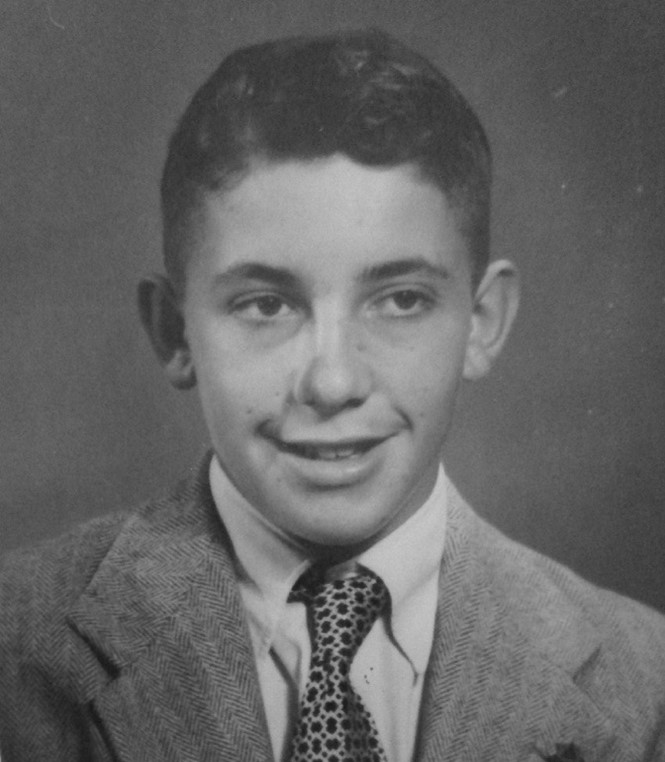
Me around the time of my barmitzvah.
This photo originally appeared in the Zionist Record.
With each passing day, my interest in music developed. By that stage I was shomer Shabbat, so there was no more rushing home to listen to the radio, no music. But there were the Bnei Akiva meetings, with lots of singing and dancing; new music, interesting tunes. It is something I look back on with high regard and respect because it helped mould me into a musical, religious young man. My love of music and composition has prevailed throughout my life and played a pivotal role in my inner emotional world. My liturgical compositions are still performed in other parts of the world, a gift with which G-d has blessed me.
When I had my barmitzvah, Charles was a medical student at Wits, while Pauline trained as a teacher at the Rabbi Judah Leib Zlotnik Seminary in Johannesburg. Rabbi Alter Hilewitz, of blessed memory, was the principal of this fine teaching institution. He went on to become principal of the Rabbinical Seminary in Johannesburg and, in that capacity, it was he who would give me my smicha (ordination as a rabbi).
My mother cherished a wish – that one son would be a doctor and the other a rabbi. As a pupil at KES, I was not particularly interested in secular academic studies. I had among my classmates Gary Player, who went on to become one of the all-time greats in the professional golfing field. As the legend goes, the principal Roy Corbett, on catching him doing a few putts during a free lesson, asked him if he thought he would ever make a living playing golf. I confess that I later embellished this urban legend, telling people I also bunked school to be a caddy for Gary and that Corbett told me that only G-d could help me. This was, of course, pure fabrication, to earn me points in the comedy stakes. I regret it now, but it seemed hilarious at the time.
Then a famed rabbinical scholar, Rabbi Michel Kossowsky, of blessed memory, entered my life. Every afternoon after school, I made my way tirelessly to Yeoville or Hillbrow to study with him and Rabbi Hilewitz. In fact, my very first yeshiva class was held with Rabbi Kossowsky, who went on to be Rosh Yeshiva of Yeshiva College in Glenhazel. But at that time there was no ground and no school.
Michel Kossowsky was the son of Rav Yitzchak Kossowsky, a brother-in-law of the famed Gadol (a Torah leader and scholar widely recognised as being among the foremost of his generation) Rav Chaim Ozer Grodzenski, and himself of such a stature as to be regarded as something of a Gadol in his own right in his native Lithuania. Yitzchak Kossowsky preceded his son in South Africa by 13 years, having arrived in Johannesburg in 1933 to take up the positions of rabbi of the Beth Hamedrash Hagadol congregation in Doornfontein and of Av Beth Din (Head of the Ecclesiastical Court). A brilliant Yiddish orator and a prolific writer in Yiddish and Hebrew, he was acknowledged throughout the country as the central authority on Orthodox Judaism. My father, for one, revered him greatly. However, Rav Kossowsky was often disheartened by the low level of Jewish knowledge and practice in his new homeland, and the extent to which even nominally Orthodox congregations failed to uphold basic Halacha (Jewish religious law). It would have been a great comfort to him had he known what dramatic strides Torah learning and practice were destined to take in South Africa, and particularly in Johannesburg, and how crucial a pioneering role his own son would play in making it all possible.
At the April 1950 conference of Hashomer Hadati (as Bnei Akiva was still called), it was announced – at Rav Michel Kossowsky’s prompting – that the organisation would shortly establish a yeshiva (academy of Torah study), South Africa’s first. What was envisaged was a formally constituted programme through which traditional Torah study could take place, either on a full- or part-time basis, after school hours. Initially known as the Yeshiva Katanah (“Minor Yeshiva”, the traditional name for a yeshiva for teens before Yeshiva Gedola – “Great Yeshiva” – age) and thereafter as the Bnei Akiva Yeshiva, it began operating at the beginning of 1951. I was one of the first of a small group of teenagers to attend the classes, generally given in Corona Lodge in Hillbrow by Rabbis Kossowsky and Baruch Rabinowitz. Others included Mendy Katz, later to become a renowned rabbi and educator at the flagship Bnei Akiva Yeshiva in Kfar haRoeh, Eliyahu Illos and Rabbi Kossowsky’s son, Zalman (who served for a time as rabbi of Sydenham Highlands North, one of the largest synagogues in Johannesburg, before emigrating to Europe). Rabbi Kossowsky taught Talmud (I remember our group getting through a substantial part of the Talmudic Tractate Bava Basra) while Rabbi Rabinowitz taught Mishna.
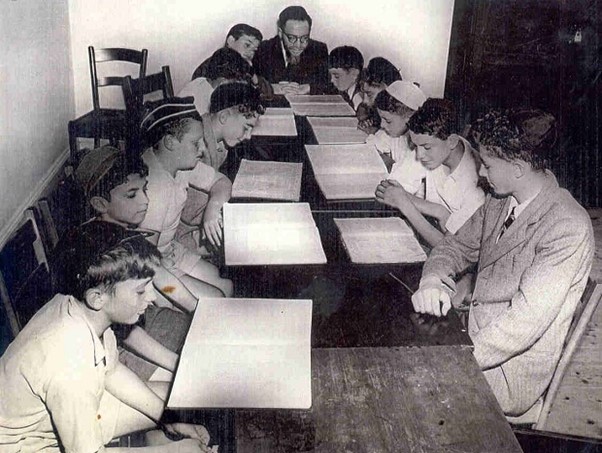
The subsequent growth of the Bnei Akiva Yeshiva from these relatively humble beginnings into today’s burgeoning Yeshiva College campus in Johannesburg’s Glenhazel suburb is a story on its own, and one with which I – having left at an early stage left to study full-time at yeshivot in the USA – had little to do. Many years later, my sons Yoni and Ariel would study and eventually matriculate from Yeshiva College, by then headed by my friend and fellow Telshe Yeshiva bochur (plural: “bochrim”’, referring to a young religious seminary student)Rabbi Avraham Tanzer. Thereafter Yoni, by then also a rabbi, taught at the school for 11 years, during which time he founded its Advanced Talmud Department (Mesivta). Suffice it to say that Yeshiva College, with its effective combination of high-quality religious and secular instruction, has been one of the main vehicles for the resurgence of Orthodox Judaism, as well as the strength of religious Zionism, in South Africa.
It was Rabbi Kossowsky who thought of a yeshiva in the United States as an outlet for my energy and as a further step in building my traditional observance and love of Torah. While it was the year before I was to write matric, it was assumed that I would be able to complete my secular studies in the American high school attached to the yeshiva. Due to the Lithuanian background of much of South African Jewry and his own personal and ideological connections to it, Rabbi Kossowsky’s yeshiva of choice was Telshe, a leading charedi yeshiva in Cleveland, Ohio. It was founded in the village of the same name in Lithuania, subsequently destroyed by the Nazis, with everyone massacred. It was famed throughout the Jewish world. By the grace of G-d, during the war, two of its Lithuanian rabbis, Eliyahu Meir Bloch and Chaim Mordechai (Mottel) Katz, were able to escape to America to explore the possibility of transferring the yeshiva there.
At the time when the two great rabbis were making their hazardous way to the United States, Lithuania had just been occupied by the Soviet Union, as per a secret non-aggression pact between Hitler and Stalin that divided Poland and Eastern Europe into German and Soviet spheres of influence. One of the Soviets’ first acts was to close down the Telshe Yeshiva, forcing it to operate as best it could underground. Germany, of course, had followed up the pact by invading and rapidly overwhelming Poland, thereby sparking the conflagration that would escalate into an all-out world war. In June 1941, Hitler launched Operation Barbarossa, a massive surprise offensive against the Soviet Union. Lithuania was one of the first territories to fall into German hands, and the round-up and mass shooting of Jews in towns and villages throughout the country began almost immediately. Only near the end of the war did Rabbi Bloch and Rabbi Katz learn that the Lithuanian Jewish community had already been all but annihilated. By then, against the odds and despite the strain of being parted from their families and worrying about their fate, they had succeeded in establishing a new yeshiva, likewise called Telshe, in Cleveland. The devastating news of what had befallen their loved ones – who included all of Rav Mottel’s 10 children and all but one of Rav Elya Meir’s – only strengthened their resolve to rebuild in the new land what had been destroyed in Der Heim. It was through the courage, steadfast faith and mesiras nefesh (self-sacrifice) of people such as these that Torah was able to take root, and ultimately thrive, in the New World.
The difference in ideology between the charedi Telshe and the modern-Orthodox, Zionist-orientated Bnei Akiva movement in which I had grown up was to be a major source of tension in my life. However, at the time, neither my parents nor I had much of an idea of the extent of the lifestyle changes that going to Telshe would impose on me. All they really focused on was the opportunity for me to continue my Torah studies at one of the world’s most prestigious yeshivot.
I was perhaps not quite mature enough to take the step, but I was excited, happy to be leaving the nest where I felt confined and restricted. In doing so, I became one of a small group of South African Jewish youngsters in the 1950s who took what was then considered to be the radical path of leaving home to study at a yeshiva overseas. Others included Eric Kaye, Ziggy Suchard, Zalman Kossowsky and Mendy Katz. Most of them would return to take up pulpits in South Africa. Back then, going off to a yeshiva meant being away from one’s family for years at a time – few, if any, of the parents had the wherewithal to fly their sons home for Pesach and Rosh Hashanah, as is common practice today. In any case, flights to and from South Africa were far less readily available than in our own times. After a century of having to import their ministers from abroad, mainly the UK, SA Jewry was at last beginning to produce its own religious leadership, although they still had to acquire their skills overseas. By the end of the decade, that too would start to change with the establishment in Johannesburg of a Ministers’ Training College. The latter lasted only a short time, but in that period it ordained seven rabbis. It would likewise play a significant part in my story.
I was only 16 when my classmate Michael Wolfson and I flew down to Cape Town, from where the ship that would be taking us to the United States would be departing. I stayed with relatives in the modern shtetl (Yiddish: “village”) of Wynberg, seeing some of the “fairest Cape” until it was time to leave. When that day came, we two aspiring yeshiva bochrim boarded the African Enterprise, a luxury cargo liner, and watched until Table Mountain became a speck in the distance. We sailed past Robben Island, whose political inmates were later to play a great role in my life.
Thus began my journey.

